
All events in Edessa
Panigiria Near
Edessa celebrates hardest when it is cold: bonfires on December 23, Epiphany in Arnissa and Carnival by the waterfalls. In summer the village squares take over, with brass bands setting the tone.
Panigiria · Edessa
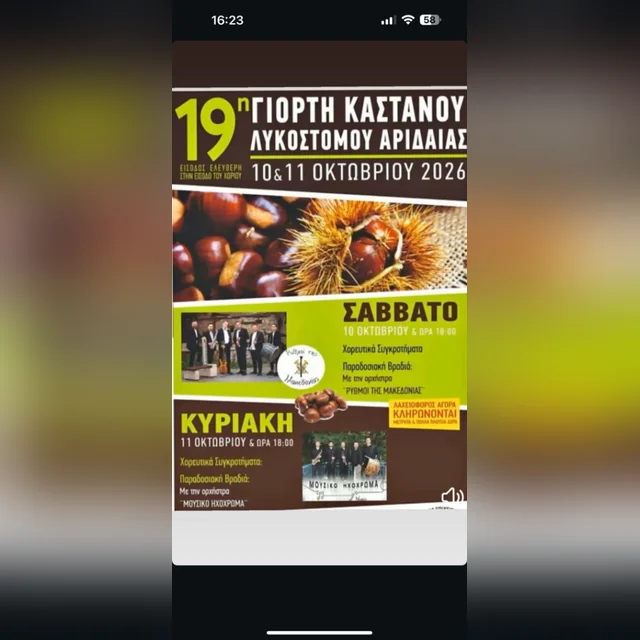
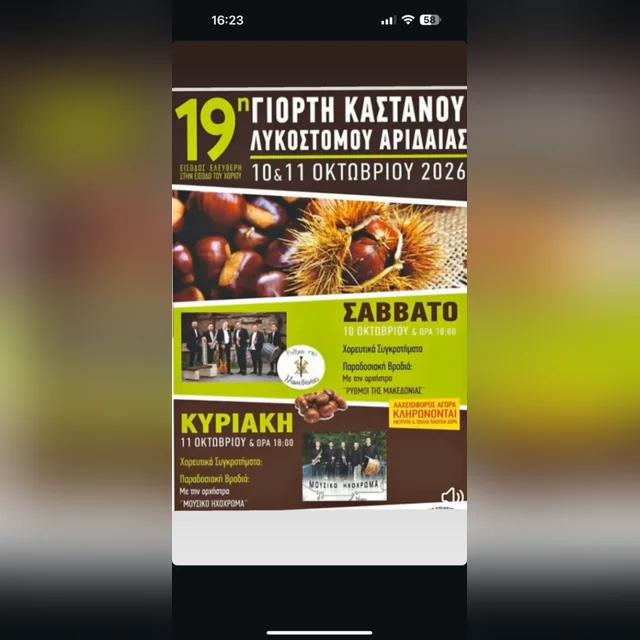
May - September
Panigiria run from May to September, and the season peaks at Dekapentavgoustos - the Dormition, on 15 August - when most villages hold their feast. Each programme is set close to its own saint's day, so the list fills late and empties out of season.
Panigiria in other cities
Can't find what you're after?
Browse by genre
Panigiria Near Edessa
On the night of December 23, Edessa and the villages around it light the bonfires of "Kolinta Babo". Volunteers gather the wood the day before and stack it in the square or the neighbourhood - in Agras, Mesimeri and Karydia the cultural associations serve bean soup and wine beside the fire while a band plays late into the night. The name means roughly "carols to grandmother", after the children's night-time carols, and tradition links the fire to a warning about Herod's massacre of the infants. A few days later, on Epiphany, January 6, Arnissa on the shore of Lake Vegoritida takes the Tzamalaria to the streets: a mock wedding whose "bride" is a boy carried by two "Captains", and the "Bumbar", the weed that comes between the couple, "dies" and rises again amid leaps and shouts of joy.
Carnival centres on the Park of the Small Waterfalls. The Edessa Carnival usually includes grilled meat and live music on the pedestrian street for Tsiknopempti, a children's parade, a grand parade and, on the last Sunday of Carnival, the local Lamka custom followed by the burning of King Carnival, with kites and bean soup on Clean Monday. In summer the calendar returns to the village saints: in Platani, for example, the cultural association holds a feast every year for Agia Paraskevi (July 26), with a traditional band, grilled meat and dance groups.
What sets a feast around Edessa apart is the sound. In Central Macedonia, Edessa and Almopia included, brass took over from the older zurna pipes: clarinet, cornet, trombone and percussion. Bands such as that of Giannakis Zlatanis made their name at the weddings, parties and panigiria of the area, and that loud, full brass sound is still the signature of the villages from the plain up to the slopes of Mount Voras (Kaimaktsalan).
Common questions
What is Kolinta Babo in Edessa?+
A December 23 custom: in the evening large bonfires are lit in the squares and neighbourhoods of Edessa and villages such as Agras, Mesimeri and Karydia, with bean soup, wine and live music from the cultural associations. See what is on this season on Mood.
When are the Tzamalaria in Arnissa?+
On Epiphany, January 6. It is a staged wedding with a "bride", two "Captains" and the "Bumbar" who disrupts the celebration, with a band and dancing through the main streets of the village by Lake Vegoritida.
What music is played at panigiria near Edessa?+
Mostly brass: clarinet, cornet, trombone and percussion, the characteristic line-up of Edessa and Almopia. Find the current calendar of feasts and parties in the area on Mood.