On Kos the feast belongs to the inland villages rather than the coastal strip: to Zia high on Mount Dikaios, to Antimacheia, Kardamaina and Kefalos, where the celebration keeps the form it always had.
Panigiria · Kos
May - September
Panigiria run from May to September, and the season peaks at Dekapentavgoustos - the Dormition, on 15 August - when most villages hold their feast. Each programme is set close to its own saint's day, so the list fills late and empties out of season.
The feast here was always the community's business rather than an organiser's. Women from villages such as Zia gathered provisions from the houses so the celebration could be set up, and women chiefly from Kardamaina, Kefalos and Antimacheia travelled to other islands for the niamera, the nine-day devotional obligations. It is that logic of contribution that keeps the feast open and free of charge to this day. August 15 is the peak, on Kos as on neighbouring Nisyros, and it is the day the villages fill with people coming back.
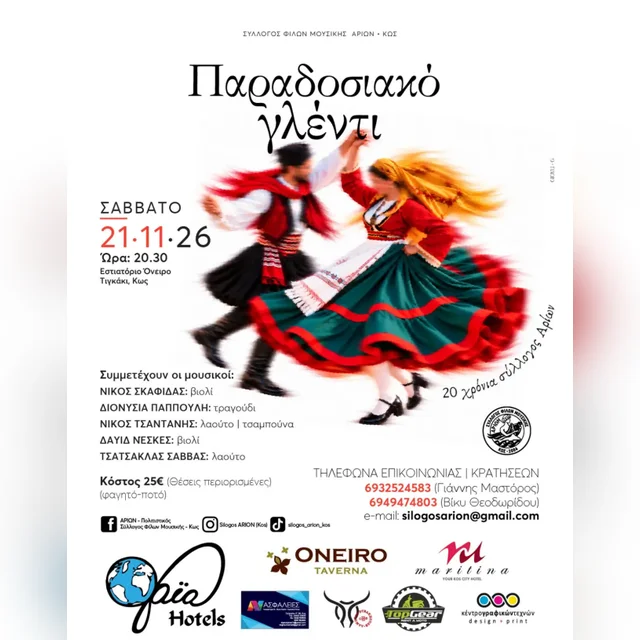
The music is Dodecanesian, the same family as on Rhodes: violin and laouto hold the tune, and the dance that opens the circle is the sousta, fast and springing, danced in pairs. The table rests on what the island gives - goat or lamb, local cheeses, bread and wine - and the celebration runs late. Zia, built on the slope of Mount Dikaios, and Old Pyli keep the most mountainous character, while Kardamaina and Kefalos bring the feast closer to the sea. Going takes no ticket and no booking: you take a place at one of the long tables, order, and step into the circle once the band starts a dance you know.
In the inland and southern villages - Zia, Antimacheia, Kardamaina, Kefalos and Pyli - peaking around August 15. See the current calendar on Mood.
Dodecanesian, as on Rhodes: violin and laouto hold the tune, and the principal dance is the sousta, fast and springing, danced in pairs.