Germany · Music
Events in Berlin, Germany
Berghain in a former power plant (2004), Tresor founded in 1991, and a club culture so central to the city that Berlin techno was added to Germany's national intangible cultural heritage in March 2024. Clubs run from Saturday night into Monday - every show on Mood.
Find eventsAsk Mood







Berlin music scene
Berlin's techno scene emerged from the empty industrial spaces left after the fall of the Wall in November 1989, when abandoned buildings in the former East became impromptu clubs. Tresor opened in March 1991 in the vault of the bombed-out Wertheim department store near Leipziger Platz and built the Detroit-Berlin techno axis that defined the decade; it relocated in 2007 to a disused power plant (Kraftwerk) on Köpenicker Straße. The Love Parade, which began as a political demonstration in 1989 with around 150 people, grew into a march of more than a million through the 1990s. In March 2024, Berlin's techno culture was added to Germany's nationwide register of intangible cultural heritage.
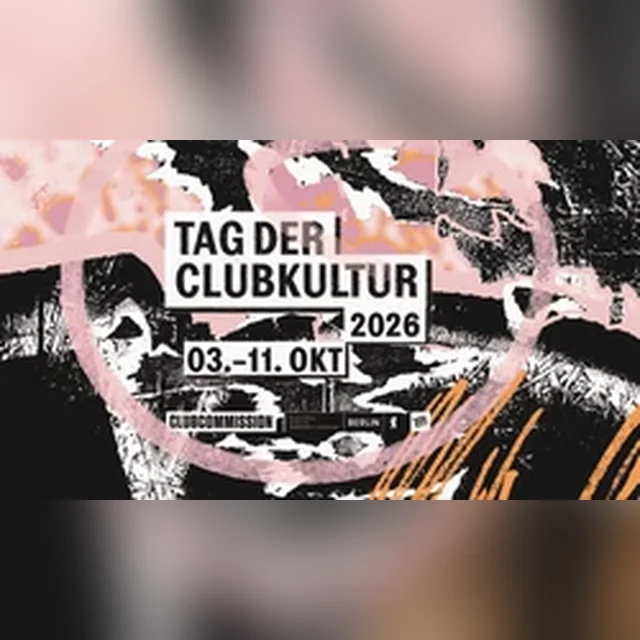
Berghain - opened in 2004 in a former power plant in Friedrichshain by Norbert Thormann and Michael Teufele, successors to the Ostgut club (1998-2003) - is the most internationally recognised techno club in the world. Its Klubnacht runs from Saturday night through Monday morning, with the Panorama Bar on the upper floor and a Funktion-One sound system. Berlin's clubs are not bound by fixed closing times, and venues including ://about blank, Sisyphos, Kater Blau on the Holzmarkt, and RSO sustain a scene that runs continuously across the weekend. The Clubcommission, founded in 2000, represents more than 200 of the city's venues.
Beyond electronic music, SO36 in Kreuzberg - open since 1978 and a hub of the West Berlin punk scene - remains a landmark for punk and rock. The Berliner Philharmonie, the Hans Scharoun-designed home of the Berlin Philharmonic, opened in 1963 and is among the world's most acoustically celebrated concert halls. Funkhaus Berlin, the former GDR state radio complex on the Spree, now hosts concerts and electronic events, and Berlin Atonal - first held from 1982 to 1990 and revived in 2013 at Kraftwerk - programmes experimental and industrial music. Jazz runs year-round at clubs including the A-Trane and Quasimodo in Charlottenburg.
Events near Berlin
- Amsterdam4,348 4,348 upcoming events
- Prague2,202 2,202 upcoming events
- Budapest2,177 2,177 upcoming events
- Zurich2,099 2,099 upcoming events
- Rotterdam1,147 1,147 upcoming events
- Warsaw959 959 upcoming events
- Bratislava582 582 upcoming events
- Kraków567 567 upcoming events
- Utrecht268 268 upcoming events
- Kaunas230 230 upcoming events
- Brussels148 148 upcoming events
- Hamburg18 18 upcoming events
Show all 57 citiesShow less
- Lille16 16 upcoming events
- Vilnius580 580 upcoming events
- Milan37 37 upcoming events
- Riga588 588 upcoming events
- Paris3,662 3,662 upcoming events
- London10,164 10,164 upcoming events
- Timișoara108 108 upcoming events
- Cluj-Napoca173 173 upcoming events
- Lyon7 7 upcoming events
- Tallinn662 662 upcoming events
- Manchester19 19 upcoming events
- Liverpool4 4 upcoming events
- Rome5 5 upcoming events
- Marseille14 14 upcoming events
- Nantes14 14 upcoming events
- Bucharest493 493 upcoming events
- Toulouse6 6 upcoming events
- Bordeaux348 348 upcoming events
- Tirana1 1 upcoming event
- Florina1 1 upcoming event
- Aetomilitsa1 1 upcoming event
- Barcelona2,675 2,675 upcoming events
- Thessaloniki216 216 upcoming events
- Corfu4 4 upcoming events
- Katerini2 2 upcoming events
- Meteora2 2 upcoming events
- Orestiada1 1 upcoming event
- Chalkidiki Regional Unit1 1 upcoming event
- Komotini4 4 upcoming events
- Ierissos1 1 upcoming event
- Lamia1 1 upcoming event
- Amvrakia2 2 upcoming events
- Skopelos1 1 upcoming event
- Mantoudi-Limni-Agia Anna Municipality1 1 upcoming event
- Patras19 19 upcoming events
- Grammatiko1 1 upcoming event
- Athens837 837 upcoming events
- Chios2 2 upcoming events
- Madrid53 53 upcoming events
- Syros4 4 upcoming events
- Mykonos6 6 upcoming events
- Troulaki3 3 upcoming events
- Paros1 1 upcoming event
- Ios8 8 upcoming events
- Santorini1 1 upcoming event
- Astypalea2 2 upcoming events
- Chania7 7 upcoming events
- Tilos2 2 upcoming events
- Rethymno1 1 upcoming event
- Heraklion13 13 upcoming events
- Rhodes6 6 upcoming events
- New York City8,572 8,572 upcoming events
- Miami5 5 upcoming events
- Austin2,165 2,165 upcoming events
- San Antonio169 169 upcoming events
- Los Angeles5,398 5,398 upcoming events
- Sydney2 2 upcoming events
Common questions
What events are in Berlin tonight?
Berlin runs techno, house, live music, and concerts almost every night, with the heaviest club programming from Friday night through Monday morning. Tonight's full listings across all genres, with venue details and ticket links, are on Mood.
What are the best techno clubs in Berlin?
Berlin's defining techno venues are Berghain (opened 2004 in a former Friedrichshain power plant, with Panorama Bar above) and Tresor (founded 1991, now in a Kraftwerk power plant on Köpenicker Straße). ://about blank, Sisyphos, Kater Blau on the Holzmarkt, and RSO round out the weekend scene. Most run from Saturday night into Monday. This week's club nights with tickets are on Mood.
How does Berghain work and when is it open?
Berghain's main weekend party, Klubnacht, opens late on Saturday night and runs continuously through to Monday morning - there is no fixed closing time. It occupies a former power plant in Friedrichshain, with the Panorama Bar on the upper floor. The door is famously selective and photography is not permitted inside. Other events, including concerts, run on separate nights.
When do clubs close in Berlin?
Berlin clubs are not bound by legal closing times, so many run for 24 hours or longer across the weekend - parties that open on Saturday night often continue into Monday. The all-weekend rhythm at venues like Berghain, Sisyphos, and ://about blank is a defining feature of the city's nightlife. Current opening nights and events are listed on Mood.
Where can I hear live jazz and classical music in Berlin?
The Berliner Philharmonie (opened 1963, designed by Hans Scharoun) is the home of the Berlin Philharmonic and one of the world's great concert halls. For jazz, the A-Trane and Quasimodo in Charlottenburg programme nightly sets, and Funkhaus Berlin - the former GDR radio complex - hosts concerts and recordings. Upcoming shows with tickets are on Mood.
About Berlin
Berlin is a world-renowned hub for art, culture, and history, celebrated for its vibrant nightlife, diverse architecture, and complex 20th-century legacy. As a reunited capital, it serves as a melting pot of global influences, continuously evolving through its experimental spirit and influential contributions to contemporary design, fashion, and electronic music. Its character is defined by a resilient blend of historical gravitas and a forward-looking, progressive atmosphere.
Read more about Berlin
Venue guides, festival calendars and scene reports from the Mood blog.